
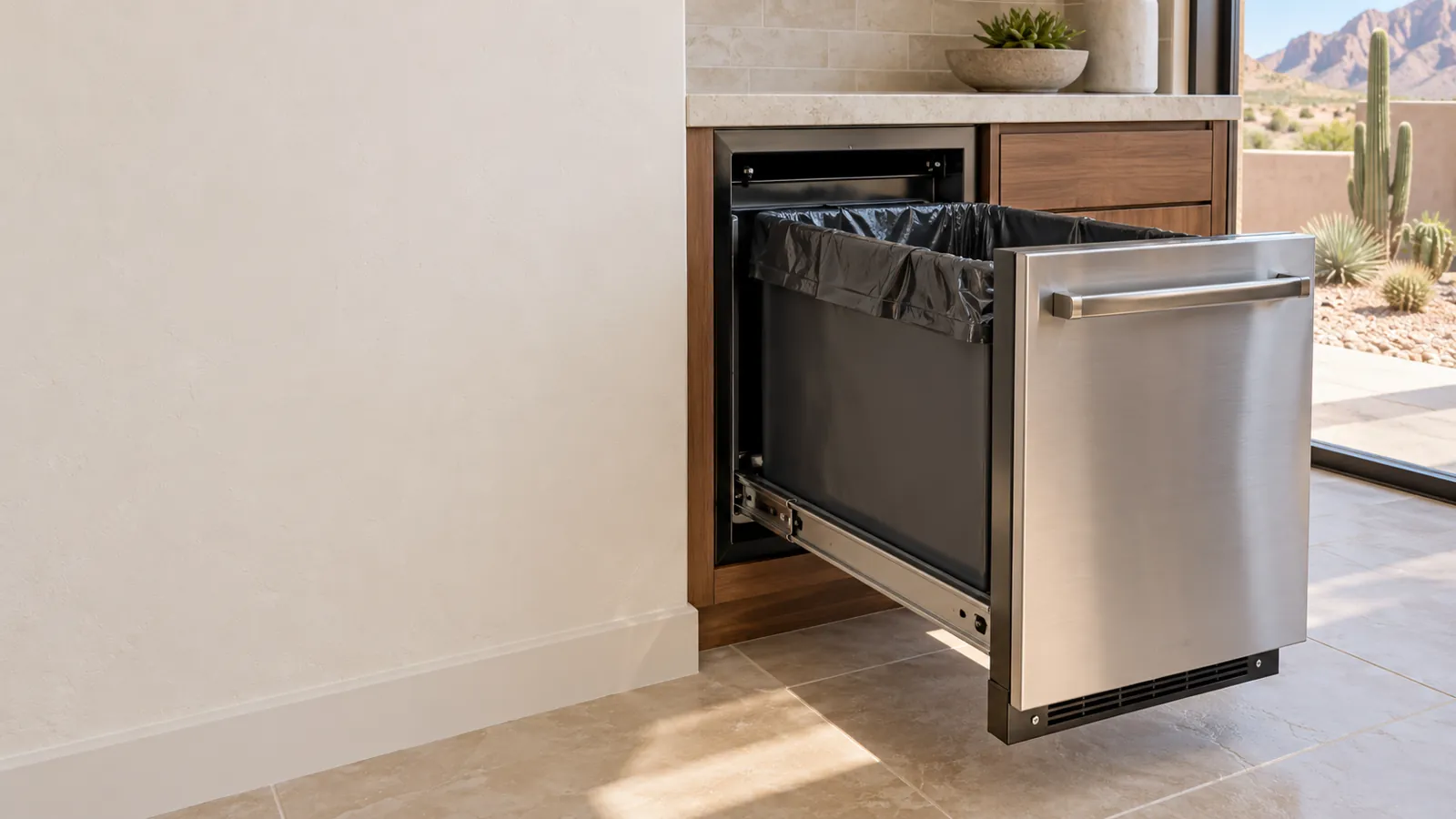
A lot of shops quietly steer clear of trash compactor repair, so people end up searching for someone who’ll do it. There are fewer of these in homes than there were twenty years ago, parts are harder to get, and a general appliance tech may have seen two in a whole career. We still fix them.
Here’s what breaks, roughly in the order we find it.
The ram won’t move
Nine times out of ten, it’s not the motor. Shut off the power at the breaker first. Then look for whatever’s jammed. An aerosol can or a bottle turned sideways in the chamber will stop the ram cold, and the machine has no way to tell you that.
If nothing’s jammed, check the drive chain or the drive screw next. A stretched chain slips when it’s under load, so the motor runs and nothing happens. That’s a real repair, but not a big one.
It runs but doesn’t compact
Usually the ram is moving but not pressing down all the way. On models with a drive screw, the nut that rides on the screw wears out. Once it does, the ram moves but has no force behind it. You can spot this one because the bag looks pushed around instead of crushed.
It won’t start at all
Start with the key switch and the door safety switch. Both are there to keep you safe, both are mechanical, and both get used every single time, so they wear out first. A compactor with a safety switch that’s been disabled or bypassed is dangerous. We won’t leave one that way, no matter what it costs to fix right.
Then check the drawer switch. If the drawer isn’t closing straight, the machine thinks it’s open and won’t run.
It smells
This is the most common complaint, and the least mechanical. Compacting squeezes liquid onto the face of the ram, the chamber walls and the drawer runners. Emptying the bag doesn’t touch any of that. Clean the ram and the walls, replace the charcoal filter, and the smell stops.
The bag keeps tearing
It’s almost always the wrong bag. Compactor bags are made thick for a reason, and a regular kitchen bag won’t hold up to the pressure.
Tip The other cause is a sharp edge on the lip of the chamber, left over from an old jam. Check for that before you buy more bags.
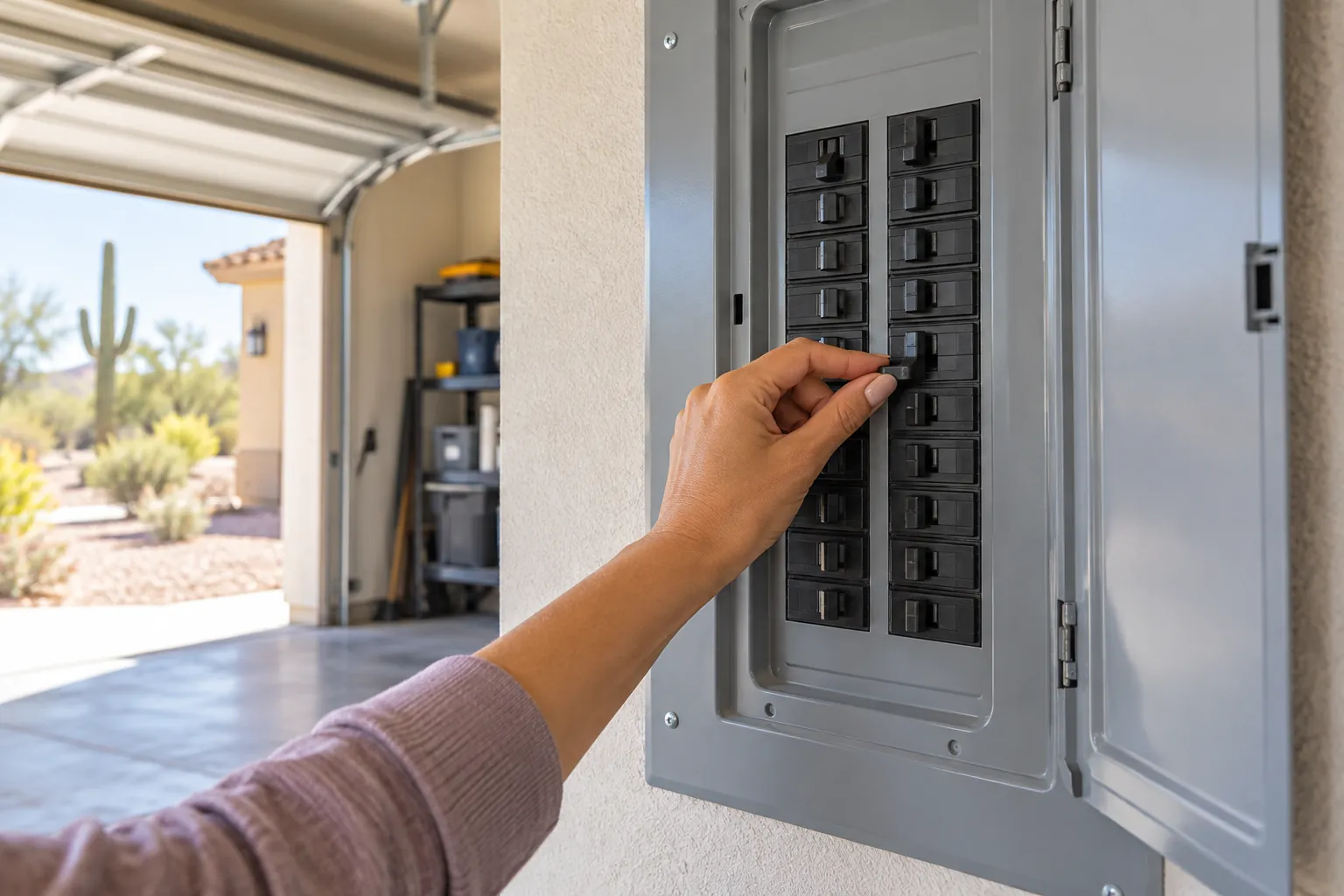
What we’d check before calling anyone
- Turn the power off at the breaker.
- Look in the chamber for anything wedged in there.
- Make sure the drawer closes straight and the key switch turns easily.
- Wipe off the face of the ram.
Those steps take care of a fair share of what people call us about. We’d rather tell you that than come out and charge you to say it.
When we’d tell you to replace it
A bent ram or a dead gearbox. Both take a lot of labor on a machine that isn’t expensive to buy new, so replacing it usually makes more sense. Nobody here works on commission, so we’ve got no reason to push a repair that doesn’t add up.
Everything else on this list is worth fixing.
Why so few people will work on these
Trash compactors stopped coming standard in new kitchens around the turn of the century. The ones still out there are getting old, parts got harder to find along with them, and most general appliance techs have never worked on one. That doesn’t mean they can’t be fixed. It just means a call about one gets passed around a while before it lands with somebody who has.
We keep working on them because the machines aren’t complicated. There’s a motor, a drive screw or a chain, a ram, and two or three safety switches. Next to a modern dishwasher full of sensors, a compactor is pretty basic.
About safety
A compactor ram pushes down with a lot of force. The safety switches are what keep that force away from whoever’s loading it. If somebody before us disabled a switch to get the machine running, that machine is dangerous. We’ll tell you so and fix it right, not hand it back running with the switch still bypassed. A bypassed safety switch is never OK on a machine in a family kitchen.
Stop Anything you check yourself starts with the power off at the breaker, not at the switch.