
Most refrigerator maintenance advice is a list of ten things, and eight of them don’t matter. Three do. In Arizona, one of those three matters more than everything else put together.
Clean the condenser coils twice a year
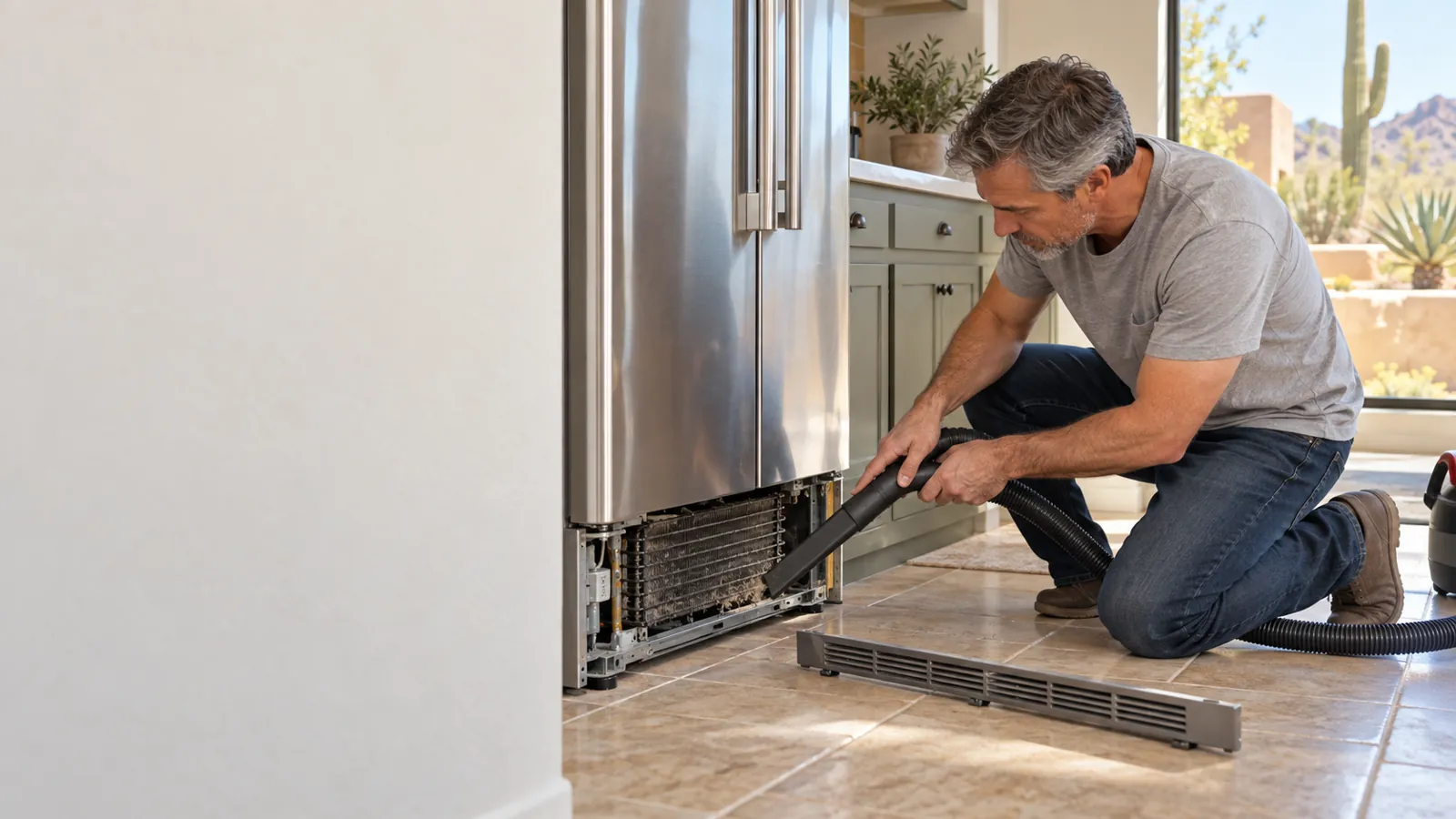
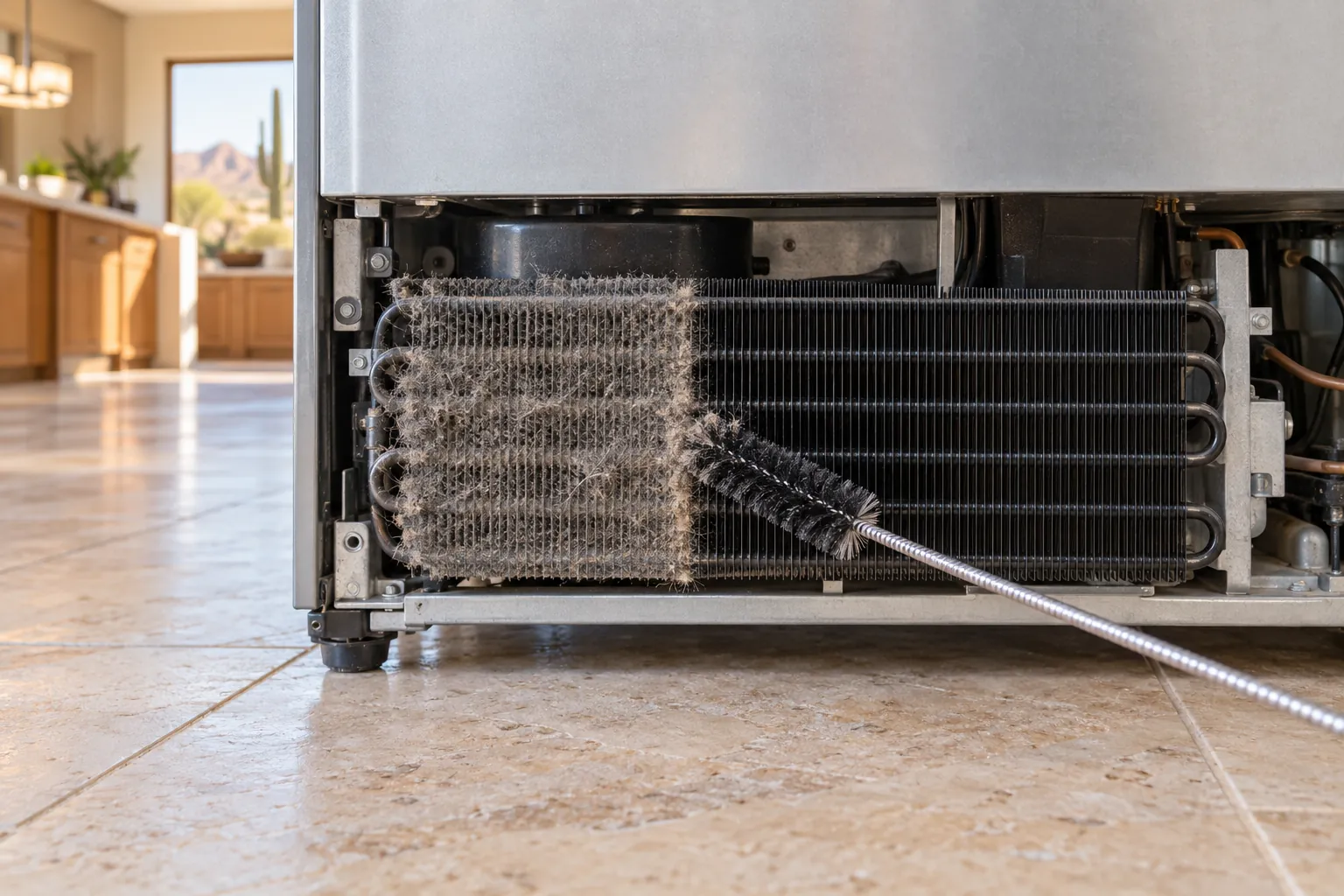
This is the big one here. The coils on the back or underneath are how the fridge gets rid of heat. When they’re packed with dust, the compressor can’t dump heat well, so it runs longer and hotter to hold the same temperature. When the air around it is 110 to 115 degrees, there’s nothing left in reserve for that.
It’s twenty minutes with a vacuum and a coil brush, twice a year. Garage and laundry-room fridges need it more often than kitchen ones because they pull in a lot more dust. We’ve opened up eight-year-old fridges that would have gone fifteen if anybody had cleaned the coils.
Check the door seal
Close the door on a dollar bill and pull it out. If it slides out with no drag, the seal is letting warm air in all the time, and the compressor is running to make up for it.
Tip Clean the gasket with warm soapy water first. A seal that looks worn out is often just sticky.
If it’s split or flattened for good, replace it. The part doesn’t cost much, and you’ll see the difference right away.
Keep the defrost drain clear
Water pooling under the crisper drawers is almost never a leak. It’s the defrost drain plugged with ice or gunk, so the melted frost has nowhere to go. Clearing it takes five minutes, some warm water and a little patience. It keeps people from replacing a fridge that works fine.
Set it right, then leave it alone
37 to 40 degrees in the fresh food section, and zero in the freezer. Setting it colder than that doesn’t keep food any better. It just runs the compressor more. Check it with a thermometer, not the dial. Dials drift as fridges get older, and a fridge running four degrees warm spoils food slowly enough that nobody blames the fridge.
What to skip
Skip the deodorizing products, the coil-cleaning sprays that say you don’t have to move the fridge, and anything sold as a fridge tune-up. Baking soda works and costs a dollar. Nothing you spray on the outside gets to the coils.
How Arizona changes things
Two facts explain most of what we see. First, water here runs 16 to 28 grains per gallon, which is very hard water. The national range is 7 to 10. So ice makers and water lines scale up a lot faster. If your fridge has a water filter, change it every six months, and really do it.
Arizona Summer heat here runs 110 to 115 degrees. That means a garage fridge is running hotter than most refrigerators are rated for. Maintenance can’t fully fix that. It can only slow the wear down.
When maintenance won’t fix it
Stop If the compressor is clicking on and off every few minutes, the back panel is hot to the touch, or you can hear it running nonstop while the inside never gets cold, a cleaning schedule won’t fix that. Those are signs of trouble in the sealed refrigerant system, which has to be opened with special tools and training, and they need someone with gauges.
The maintenance schedule, on one page
Twice a year: vacuum the condenser coils. Pull the fridge out, brush and vacuum, and push it back with four inches of space behind it. This is the job that adds years.
Every three months: check the door seal with a dollar bill, wipe down the gasket, and look under the crisper drawers for standing water.
Every six months: change the water filter if your fridge has one. With water this hard, an overdue filter is the most common cause of bad-tasting ice and slow dispensing.
Once a year: check the temperature with a thermometer instead of the dial, and clear the defrost drain even if you haven’t seen any water.
That’s the whole list. Anything past it is either for looks or somebody trying to sell you something.
What a service call should look like
If you do call us out, the tech should take temperatures in more than one spot, look at the coils and the seal before opening anything up, and tell you what the repair costs before starting. Nobody here works on commission. So if your fridge is fourteen years old and needs a sealed refrigerant system repair, we’ll tell you that replacing it is the better use of your money.