
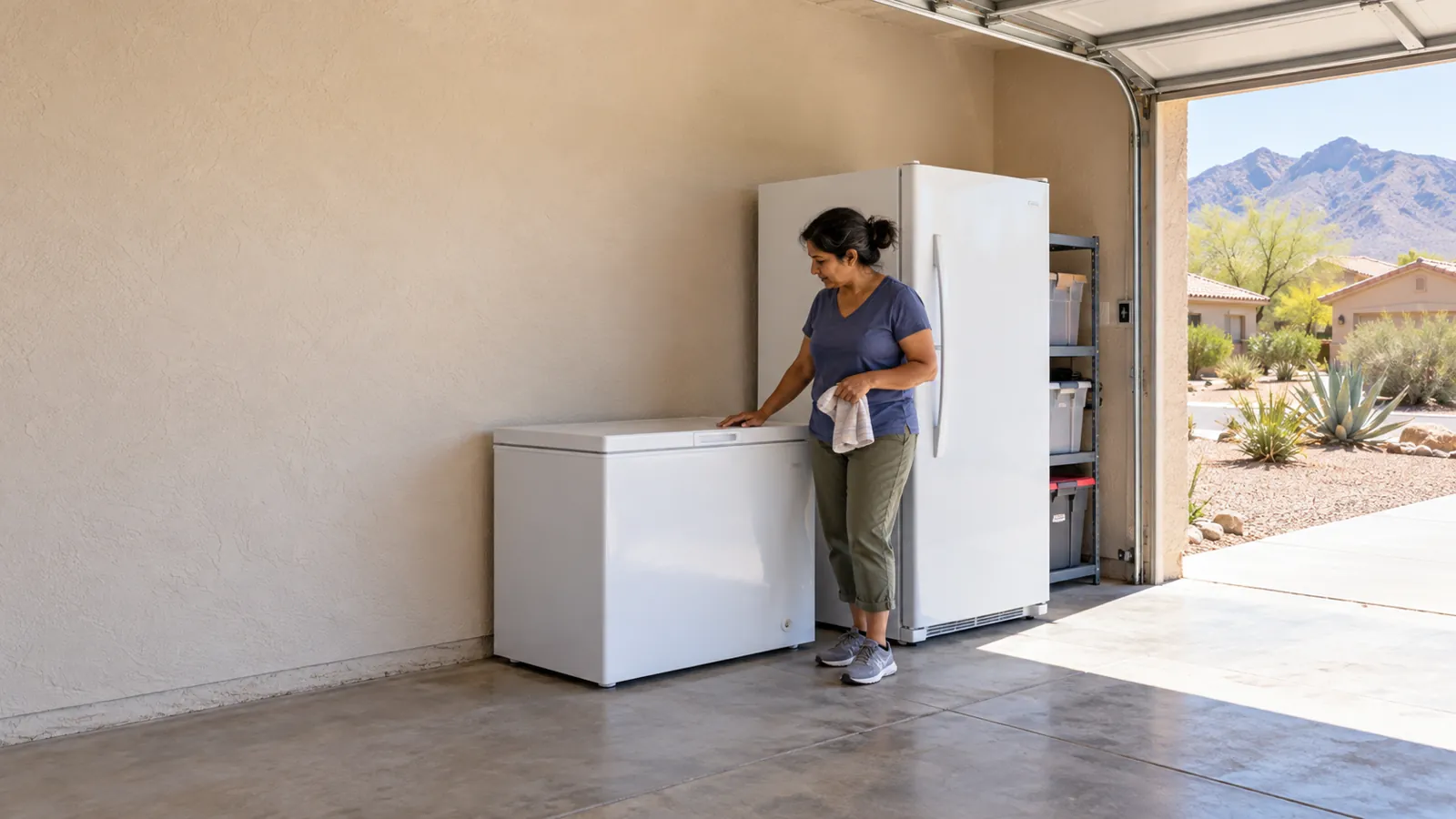
Two things in Arizona wear out appliances faster than anywhere else we’ve worked, and neither one is the appliance’s fault. Good Arizona appliance maintenance comes down to two things: hard water and extreme heat. This guide covers what the water and the heat do to your machines, plus a schedule that keeps you ahead of both.
Two facts behind almost every service call
Water here runs 16 to 28 grains per gallon. That’s very hard water. The national range is 7 to 10. At our numbers the water is chewing on every part it touches, not just leaving a little spotting now and then. Then summer heat runs 110 to 115 degrees. Anything in a garage, in a laundry room with no airflow, or built into cabinets is running hotter than most of these machines are rated for.
Arizona Neither fact is a defect in your appliance. The manufacturer’s spec sheet just assumed you wouldn’t have both at once, every year, for as long as you own the machine.
What hard water does to each appliance
Scale is the hard, chalky crust hard water leaves behind, and it doesn’t build up evenly. It piles up fastest wherever the water has to squeeze through something narrow.
Ice makers take the worst of it. The fill tube and the water valve (where the water comes in) are both narrow to begin with. At 16 to 28 grains they close up slowly over time, not all at once. The warning signs come in order. Cubes get smaller, then hollow, then cloudy, and the ice maker slows down before it stops. If the house has never had a softener, that’s the first place we look.
Dishwashers lose their spray arms from the outside in. The little holes that aim water at your dishes are about as wide as the mineral crust that plugs them. The top rack goes first. It’s farther from the pump and only gets the pressure left over after the lower arm takes its share. Checking the holes with a toothpick once a month is a lot cheaper than a service call later.
Washing machines scale up the water valve and the heating element, if the model has one. You’ll usually notice a wash cycle that runs long or a machine that fills slower than it used to. It’s easy to blame the machine, when the real problem is mineral buildup right where the water comes in.
Refrigerators with a dispenser or an ice maker in the door have the same fill-tube problem as a standalone ice maker, plus the water filter. With water this hard, an overdue filter is the most common reason for bad-tasting ice or a dispenser that slows to a trickle. It’s also the cheapest fix on this whole page.
What heat does to each appliance
Heat doesn’t eat parts the way scale does. It takes away the extra room a machine needs to keep running for its full rated life.
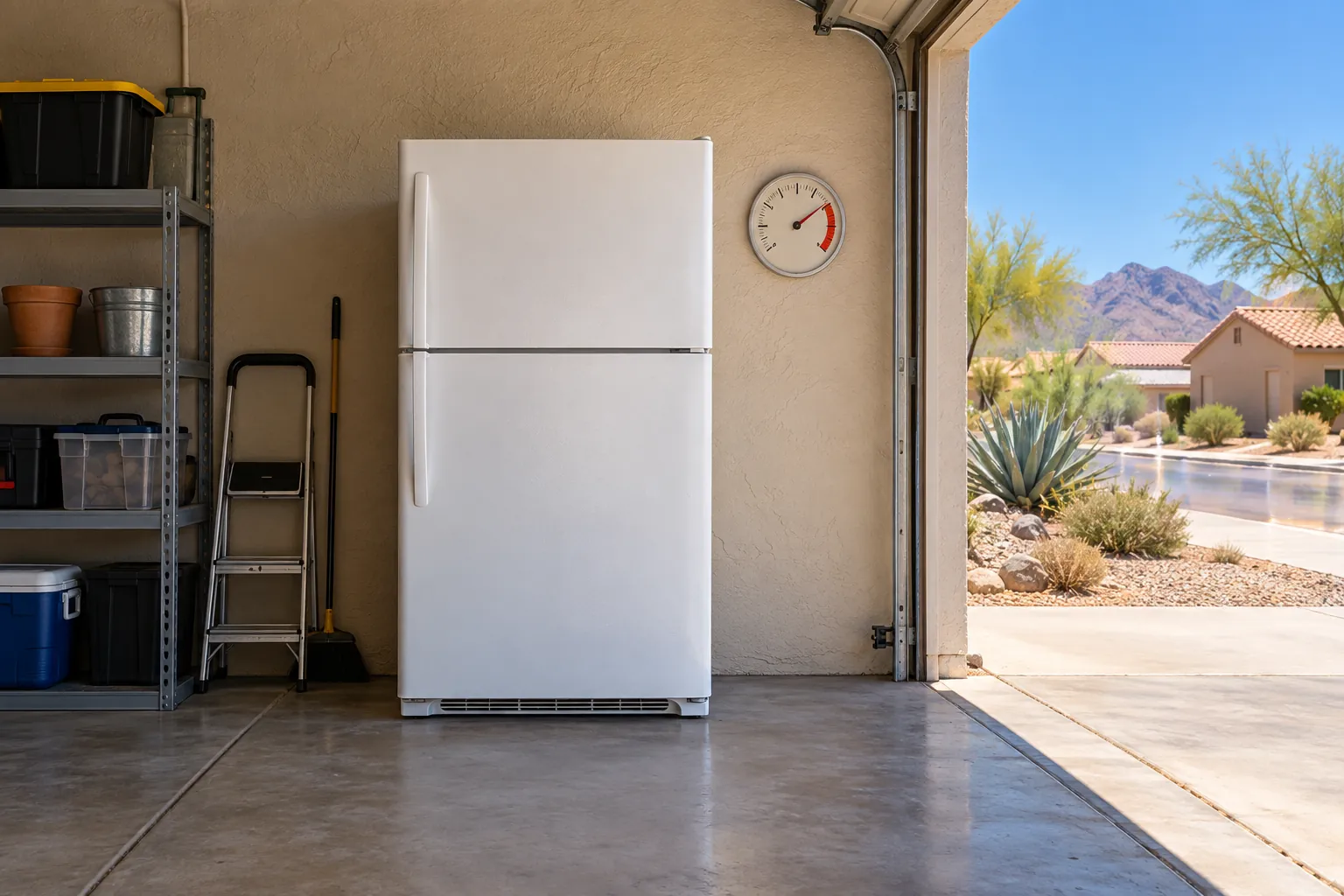
Garage refrigerators and freezers work harder than anything else in the house. A compressor moves heat from inside the cabinet out into the air around it. When the garage is 110 to 115 degrees, there’s a lot less difference between inside and outside for it to work with. So it runs longer to hold the same temperature. A fridge that would last fifteen years in an air-conditioned kitchen can show real wear by year eight in a garage with no insulation. It’s not a worse machine. It’s been doing harder work the whole time.
Wine coolers and beverage centers built into cabinets get less air than anything else on this list. A freestanding unit dumps its heat into an open room. A built-in pulls air through a narrow vent and pushes it back out through cabinets that were made to look good, not to move air. Arizona heat leaves that setup with nothing in reserve, so these are usually the first units to act up in a hot summer.
Dryers vented through a hot attic have a real temperature difference to work with most of the year in other places. Here in July there’s almost none. Put that together with a vent that’s already too long or clogs easily, and you’ve got a real fire risk. Of everything on this page, that’s the one to treat as urgent instead of routine.
Ovens and stoves are the exception. They make their own heat no matter how hot the room is, so the weather barely changes how hard they work. What wears them out is use and age, not climate. They’re one of the few appliances in the house Arizona doesn’t make worse.
The maintenance calendar
We kept this short. Every job on it is here because it prevents a repair.
Twice a year: fridge and freezer condenser coils. Pull the unit out, vacuum and brush the coils, and push it back with some space behind it. Garage and laundry-room units need this more than kitchen ones because they pull in more dust. Nothing else you can do matters more for how long a compressor lasts here.
Twice a year: the condenser on any built-in refrigeration (Sub-Zero, Wolf, or similar). Same job, smaller grille, and it matters more in a hot climate for the same reason.
Every three months: door seals on fridges, freezers and dishwashers. Close the door on a dollar bill and pull. If it slides out with no drag, warm or humid air is getting in all the time, and something else is working harder to make up for it.
Monthly: dishwasher spray arms. Thirty seconds with a toothpick, checking the holes for scale before they plug up.
Every six months: any water filter, on a fridge, dispenser, or ice maker. With water this hard, an overdue filter is the most common cause of bad-tasting or slow ice.
Every six months: the dryer vent, and more often for a long run or an attic vent in summer heat.
Once a year: check fridge and freezer temperatures with a real thermometer. Don’t trust the dial. Dials drift, and a unit running four degrees warm spoils food slowly enough that nobody blames the appliance.
When it’s no longer a maintenance job
Everything above is wear you can prevent, and a homeowner can do all of it. Some signs mean it’s past that point, and the machine needs someone with gauges, not a vacuum:
- A compressor clicking on and off every few minutes in an uneven pattern, instead of running a normal cycle.
- A back panel or cabinet that’s hot to the touch, on a unit that has always run warm but never this warm.
- A machine that runs nonstop and never gets down to temperature.
- A dryer that takes a lot longer to finish a load even after you’ve cleaned the vent.
- Any burning smell. That’s never a maintenance item. Shut the machine off right away.
Stop Cleaning won’t fix any of these. Pushing past them usually costs more than catching them early would have.
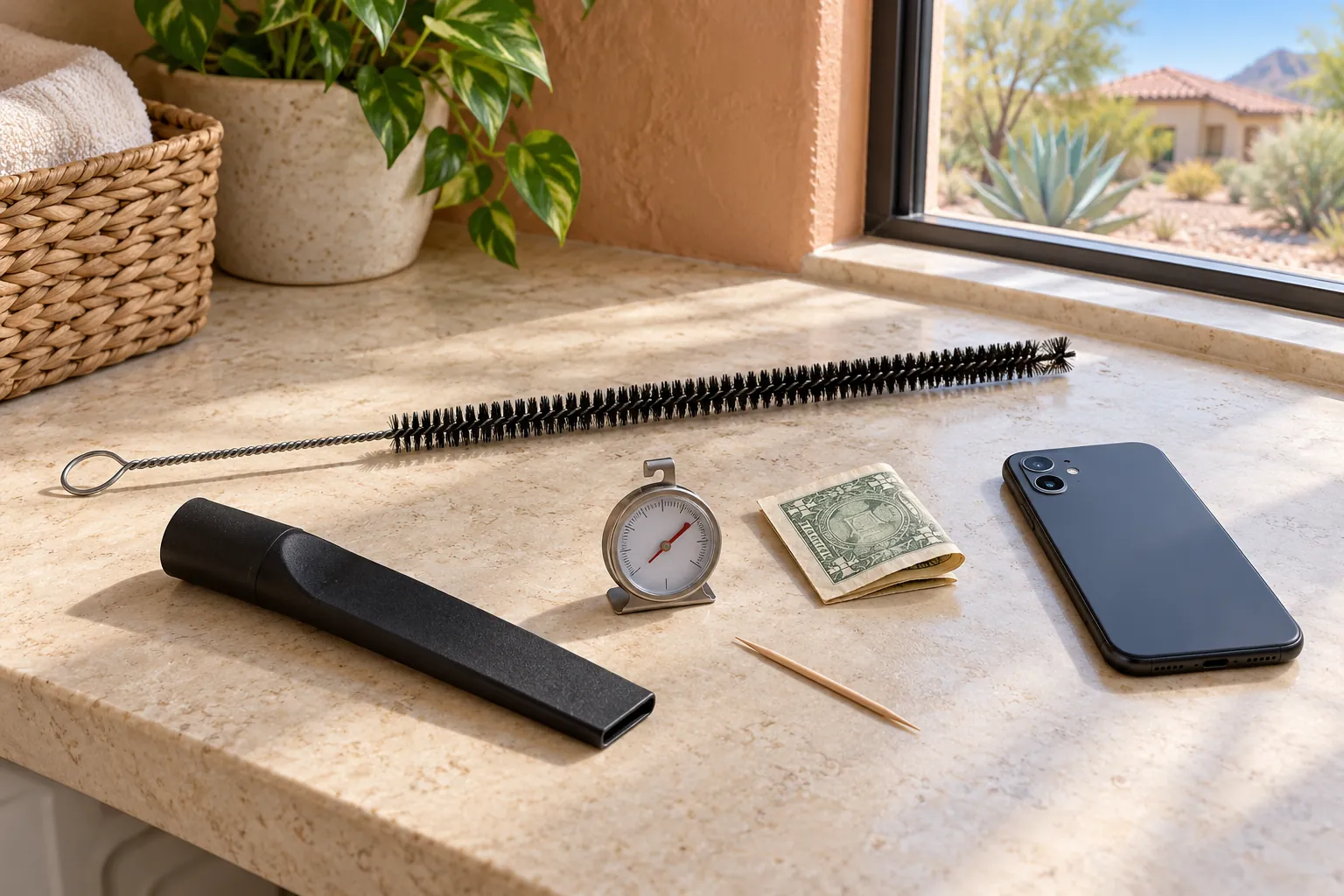
Keep a survival kit by the utility closet
Five things cover almost everything on the calendar above, and they’re all cheap:
- A coil brush and a shop vacuum attachment, for the twice-a-year job that matters most.
- A dollar bill, the quickest real test of a door seal you’ll find.
- A fridge/freezer thermometer, which costs less than the food it can save.
- A toothpick kept in the kitchen drawer, for the dishwasher spray arm holes.
- A note on your phone with today’s date, so “every six months” is something you can check, not a guess about how long it’s really been.
Tip That’s the whole kit. You won’t need a trip to a specialty store for any of it, and all five together cost less than one service call.
Who this helps
If you own a home in Pinal or Maricopa County and your appliances are more than a couple of years old, this calendar applies to every one of them. If nobody has ever cleaned the coils, do that today. If something is already showing one of the warning signs above, that’s a phone call, not a maintenance job. We quote a flat rate before anyone starts. And if the machine isn’t worth fixing, we’ll tell you straight.