
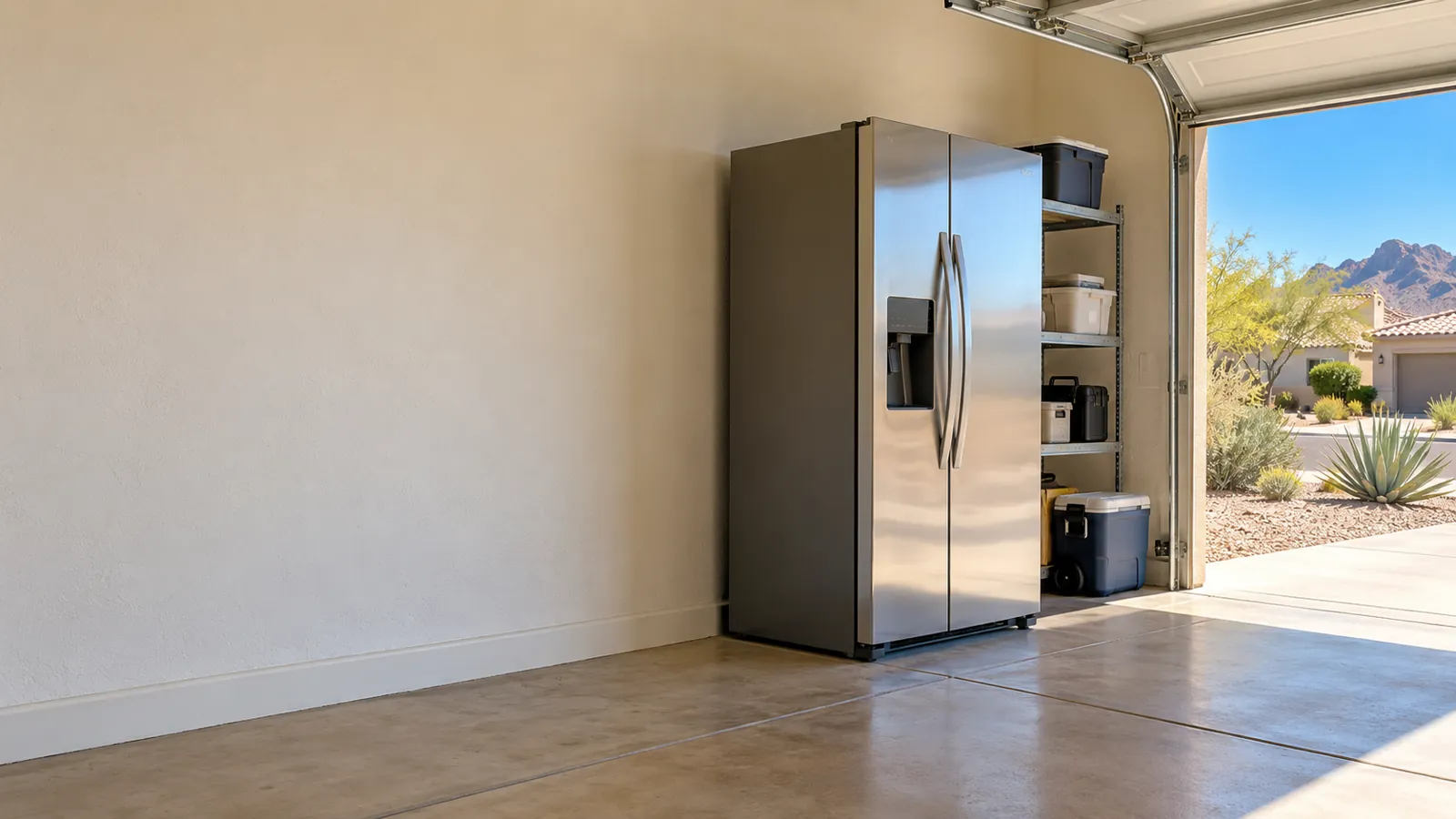
A garage refrigerator dies early in Arizona. Most people figure the fridge was old or cheap. Usually it’s neither. It’s the heat in the garage.
Most home refrigerators are rated for air up to about 110 degrees. A closed garage in Phoenix in July gets well past that, and once it does, the compressor stops shutting off. A compressor that never gets a break wears out several times faster than the one in your kitchen.
What helps
Get it off the hot wall. A west-facing garage wall in the afternoon is the worst place you can put it. Moving the fridge to an inside wall costs nothing, and for most people it’s the biggest improvement they can make.
Give it room to breathe. Four inches at the back and a few at the sides. A fridge pushed flat against the drywall just breathes its own hot air back in.
Clean the coils twice a year, not once. Dust plus 110-degree air is what kills compressors here. Coils in a garage pick up a lot more dust than they do in a kitchen, and cleaning them is the job that reliably buys you years.
Keep it full. A full fridge holds the cold better. A half-empty garage fridge turns on and off more than a full one, and jugs of water are free.
What doesn’t help
Turning it colder. When the garage is already hotter than the fridge is rated for, the thermostat isn’t what’s holding it back. Turning it down just makes the compressor run more.
Tip If you’re buying a fridge for the garage, get one that’s rated for it. It costs a little more than a standard unit, and that’s a lot less than replacing a standard unit twice.